RESIDENTIAL HEATING & COOLING
Heat Pump Installation & Replacement
Heating and cooling, planned around the way you live.
Replacing older heating or adding summer cooling? Compare central and ductless heat pumps around your rooms, existing equipment and budget, starting with a free home assessment.

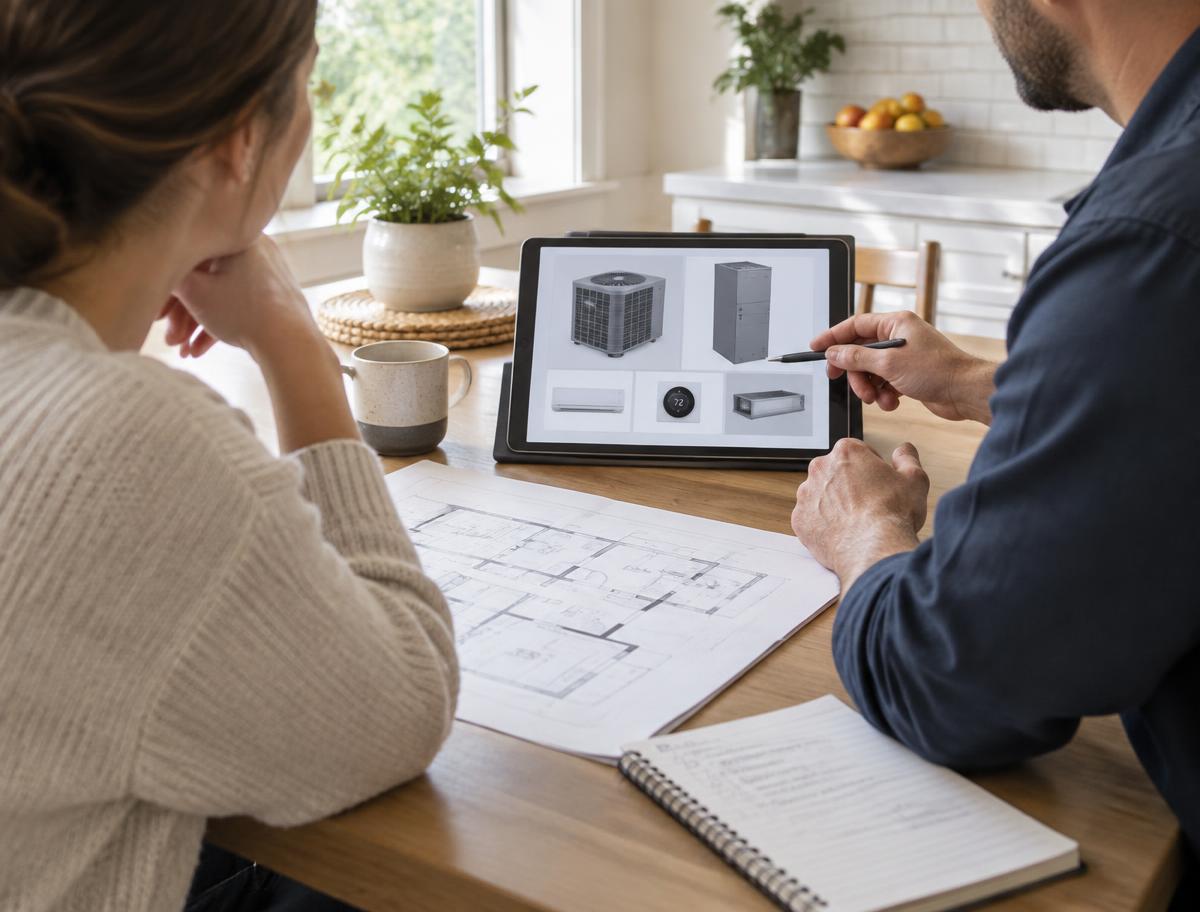

One system for both seasons. Which layout fits your home?
A heat pump can provide heating and cooling. The first useful choice is how it will serve the rooms you want comfortable.
Suitable ducts?
Explore a central system and the existing airflow.
Rooms without ducts?
Explore mini-splits with indoor units in planned zones.
Planning for winter?
Review rated output, home demand and any supplementary heat.
WHY CONSIDER ONE
What would make the upgrade worthwhile for you?
Replacing aging heating
Use the replacement decision to compare the heating and cooling you want next.
Adding summer cooling
Explore cooling for the living areas, bedrooms and other spaces that get too warm.
Addressing uneven comfort
Include the rooms that feel different. Their layout and airflow belong in the equipment discussion.
Exploring another heating option
Review what could remain from the current setup and what a change would involve.
Start with the comfort you want.
A cooler upstairs bedroom and replacement heating for the whole home are different goals. Name both if they matter so the proposal can address the complete plan.
HEATING & COOLING
How one system works through both seasons
A heat pump does not have to create all the warmth it delivers. It transfers heat between the outdoors and indoors, then changes direction to cool your home.
The next question is how that heating or cooling reaches your rooms. Central systems use suitable ducts; mini-splits deliver it from indoor units in planned zones.
SYSTEM COMPARISON
Compare central heat pumps and ductless mini-splits
Compare the same room list in each plan. Ducts, indoor-unit positions and the way you use doors change how those rooms are served.
Simplified illustration, not an installation design. Closed rooms need a coverage discussion.
| Consideration | Ducted / central | Ductless / mini-split |
|---|---|---|
| How air reaches rooms | Conditioned air moves through suitable distribution ducts. | Indoor units deliver air directly to designed rooms or zones. |
| Existing ductwork | Uses ducts; their condition and airflow need review. | Does not need conventional distribution ducts. |
| Room / zone control | Control possibilities depend on the duct and equipment design. | Unit positions, doorways and layout affect coverage and zone control. |
| Indoor equipment | A central indoor unit connects to the duct system. | Visible indoor units are positioned in the areas they serve. |
| What to review | Review duct condition, airflow and equipment compatibility. | Review the number and placement of indoor units for the rooms that matter. |
HOME SUITABILITY
What does a good fit look like in your home?
A useful recommendation should explain the fit. Bring your current heating, the rooms you want served and the equipment you hope to keep into the conversation.
Current heating & fuel
What heats the home now, what it costs to operate and what you want to keep or replace.
Insulation & windows
Heat loss, drafts and window exposure affect the heating and cooling load.
Rooms & daily use
Bedrooms behind closed doors and distant rooms need an intentional coverage plan.
INSTALLATION PATH
From your first question to installation
The home assessment is free. Review the options and proposal, then decide whether you want to proceed.
- 01
Tell us what is happening
Share your current heating system, rooms that feel uncomfortable and what you want to change.
- 02
Review the home
A free visit looks at existing equipment, layout, electrical panel and possible positions for indoor and outdoor units.
- 03
Discuss a written scope
Review suitable equipment, installation work and the written project scope before you decide.
- 04
Confirm before scheduling
If you choose to proceed, confirm paperwork, payment or financing arrangements and the installation schedule.
- 05
Follow up after installation
AirCrest provides personal follow-up so you can raise questions about your new system.
INSTALLED COST
What affects the installed cost?
The configuration and work around it determine the purchase price. Compare the same intended rooms, included tasks and written coverage.
System layout
Ducted distribution, ductless zones and the number of indoor units change the equipment and work involved.
Equipment selection
Capacity, configuration and the model chosen for your home affect the total project.
Home changes
Electrical work or duct alterations, where required, belong in the project scope.
Installation access
Mounting locations, access and the routes for refrigerant lines and drainage affect labour and materials.
Agreed coverage
Compare what each proposal includes, excludes and covers after installation—not just the equipment price.
Equipment choices and the coverage behind them
AirCrest commonly installs Novair, Gree, Kerr, Trane and Midea equipment across its projects. The actual configuration follows the rooms, required capacity and installation plan.
Request the equipment warranty and installation labour terms in writing. Check duration, exclusions and any registration requirements for the selected model.


Plan the purchase and payment together
Ask about financing options.
Ask AirCrest about financing options for your project and confirm availability and terms. Review the payment schedule and total obligation before proceeding.
Check the current program notice.
AirCrest can help identify relevant program steps, but the program administrator decides eligibility and payment. Requirements can change, so confirm them before relying on a rebate.
HEAT-PUMP FAQS
Common heat-pump questions, answered
Go deeper into your next decision
Compare room coverage, alternative heating and the work behind the quote.
YOUR NEXT STEP
Find the right fit for your home.
Tell us the rooms and seasons you want to feel better in. We’ll connect that goal to practical equipment and installation options.