What Happens During a Home Assessment?
You do not need a chosen system or a technical diagnosis. The free AirCrest assessment is a conversation about your home, the improvement you want and the installation options worth comparing.
Guidance reviewed October 15, 2026. Check the linked administrator for current program requirements.
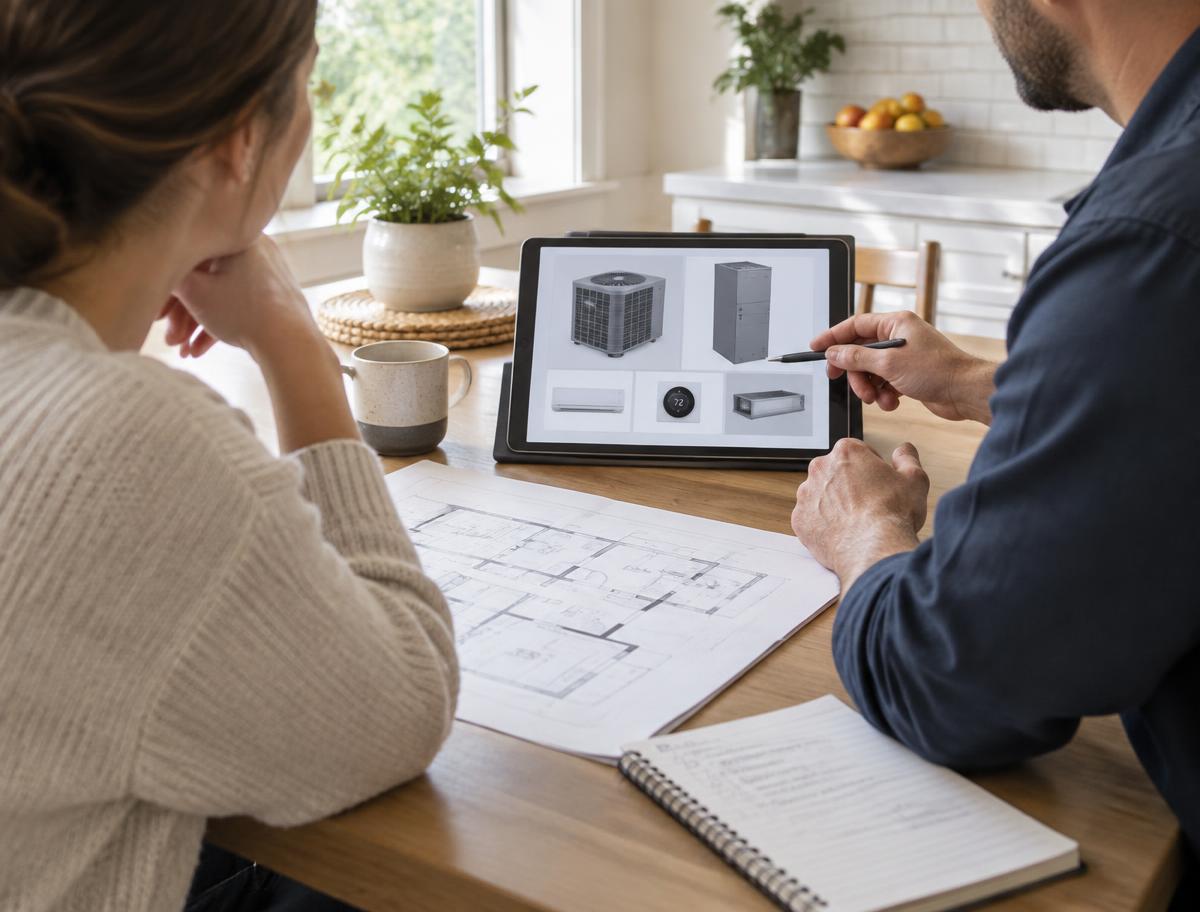
Leave understanding the options—not feeling you have to choose on the spot.
The assessment connects your current equipment and room priorities with a practical project discussion. You decide whether to proceed after reviewing the proposal.
Bring a description
Current heating and the rooms or seasons you want to improve.
Discuss the home
Equipment, layout, electrical panel and possible locations.
Review the next step
Configuration, work and price before an installation agreement.
What should you have ready?
The location and heating type
Tell us where the home is and how it is heated. Approximate equipment age helps if known.
Your comfort list
Name the rooms that are too hot, too cold or missing cooling.
Your decision questions
Bring budget priorities, another quote or equipment you hope to retain.
The visit has a simple purpose: make the next decision clearer
The free assessment is not an installation order. Scheduling is agreed directly if you proceed.
- 1
Tell us what you want to change
Share the location, current heating and rooms that matter.
- 2
Explore the home
Discuss existing equipment, the panel, room layout and potential equipment locations.
- 3
Compare a written proposal
Understand the suggested configuration, work and price before deciding.
- 4
Choose the next step
Agree paperwork, payment and scheduling directly if you proceed. AirCrest follows up after installation.
Show us what everyday comfort looks like
A bedroom door that stays closed, an upstairs office used all day or a furnace you hope to keep can change the options. These details connect the recommendation to the way you use the home.
Ask what information supports the proposed configuration and what still needs confirming. Specific tests, inspections or certifications should be confirmed directly if they are needed for your project.
Why the room plan matters
Doors closed
A comfortable living room does not tell you how a closed bedroom will be heated or cooled. Include those bedrooms in the plan.
Doors open
An open door changes air movement. Distance, layout and capacity still determine whether those rooms receive enough heating or cooling.
Illustrative floor plan, not a sizing or installation design.
What should happen before you commit?
Equipment and rooms
Know the exact configuration and the rooms or zones it is intended to serve.
Work and exclusions
List the connections, electrical or duct changes, removal and finishes included. Identify work arranged separately.
Coverage and payment
Read equipment warranty and installation labour terms separately, along with the purchase total and payment arrangements.
Is this the same as an energy audit?
No. AirCrest’s free home-system assessment helps compare equipment and installation options. An incentive program may require a separate evaluation by a qualified energy advisor. Check the program’s process before purchasing.
Start with the question you have now.
Call or email to arrange the actual assessment. The online form currently prepares a preview only.
The online assessment is preview-only. No request is sent or appointment booked.